
Many vehicle owners want to wash their own car at home. There is nothing wrong with that when it is done correctly. The problem is that many common washing habits slowly damage the paint over time. Most people do not notice the damage immediately because the vehicle still looks clean afterward. Small scratches, swirl marks, water spotting, and micro marring usually build gradually. The damage becomes more noticeable months or years later.
Professional detailing equipment exists for a reason. Proper tools, chemicals, lighting, wash media, and controlled processes help reduce friction and contamination significantly during a wash. However, not every vehicle owner wants or needs a full professional setup at home.
The goal of this guide is not to replace professional detailing. It is to help reduce unnecessary paint damage for people washing their own vehicles between professional detailing services. Even small process improvements can help minimize long-term damage compared to improper washing methods or automatic car washes.
For vehicle owners throughout Marysville, Arlington, Lake Stevens, Snohomish, and surrounding Snohomish County communities, understanding safer wash techniques can help preserve your investment much longer.
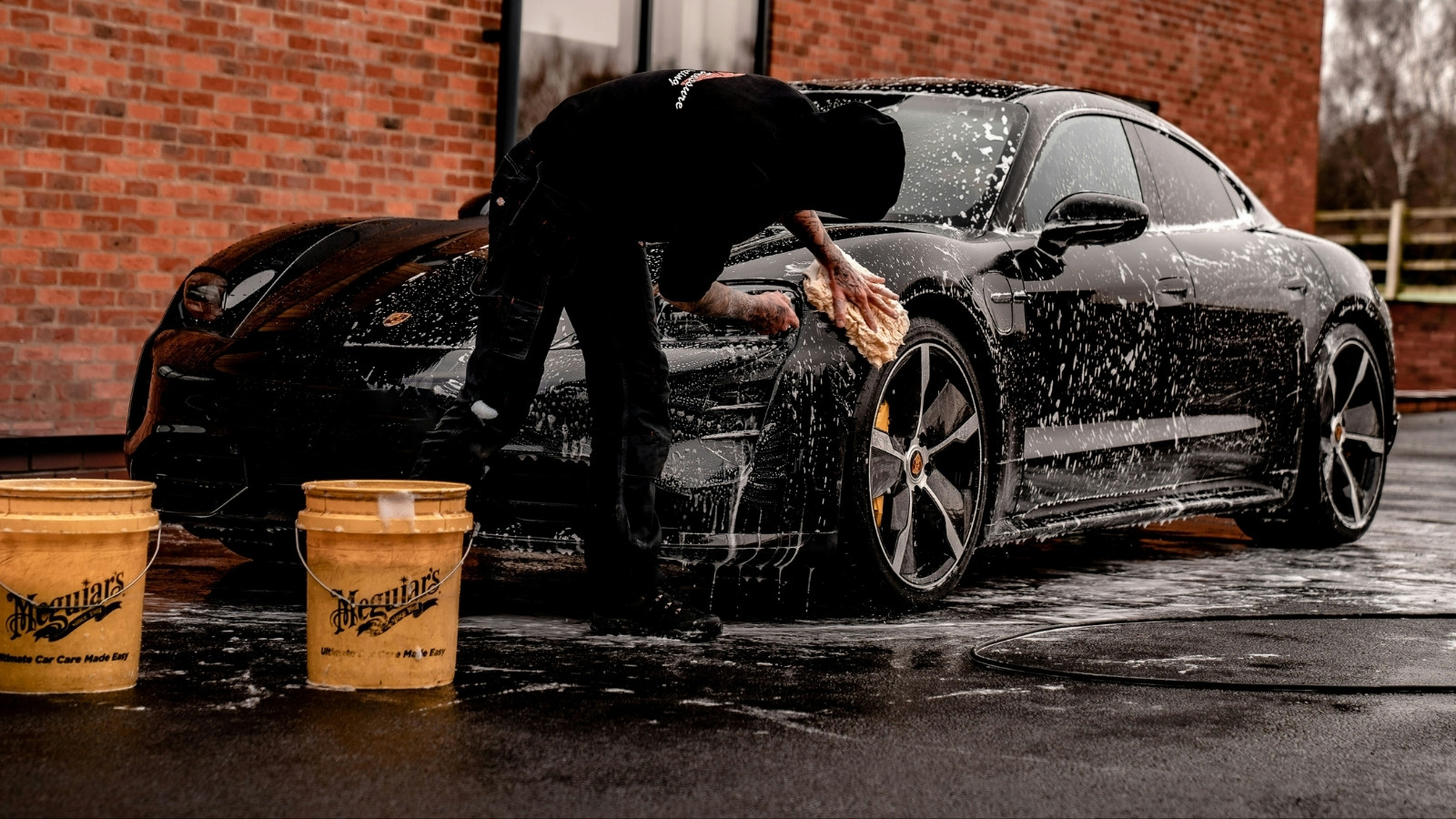
Safe washing methods focus heavily on reducing friction and contamination before touching the paint.
Why Most Paint Damage Happens During Washing
Most paint damage does not happen from water. It happens from friction and contamination moving across the paint. Dirt, brake dust, sand, pollen, and road grime sit on the surface of the vehicle. Once that contamination gets dragged across the paint, scratching begins.
This is one reason the paint correction process becomes necessary on many vehicles over time.
A vehicle can still look shiny while holding contamination that slowly damages the finish.
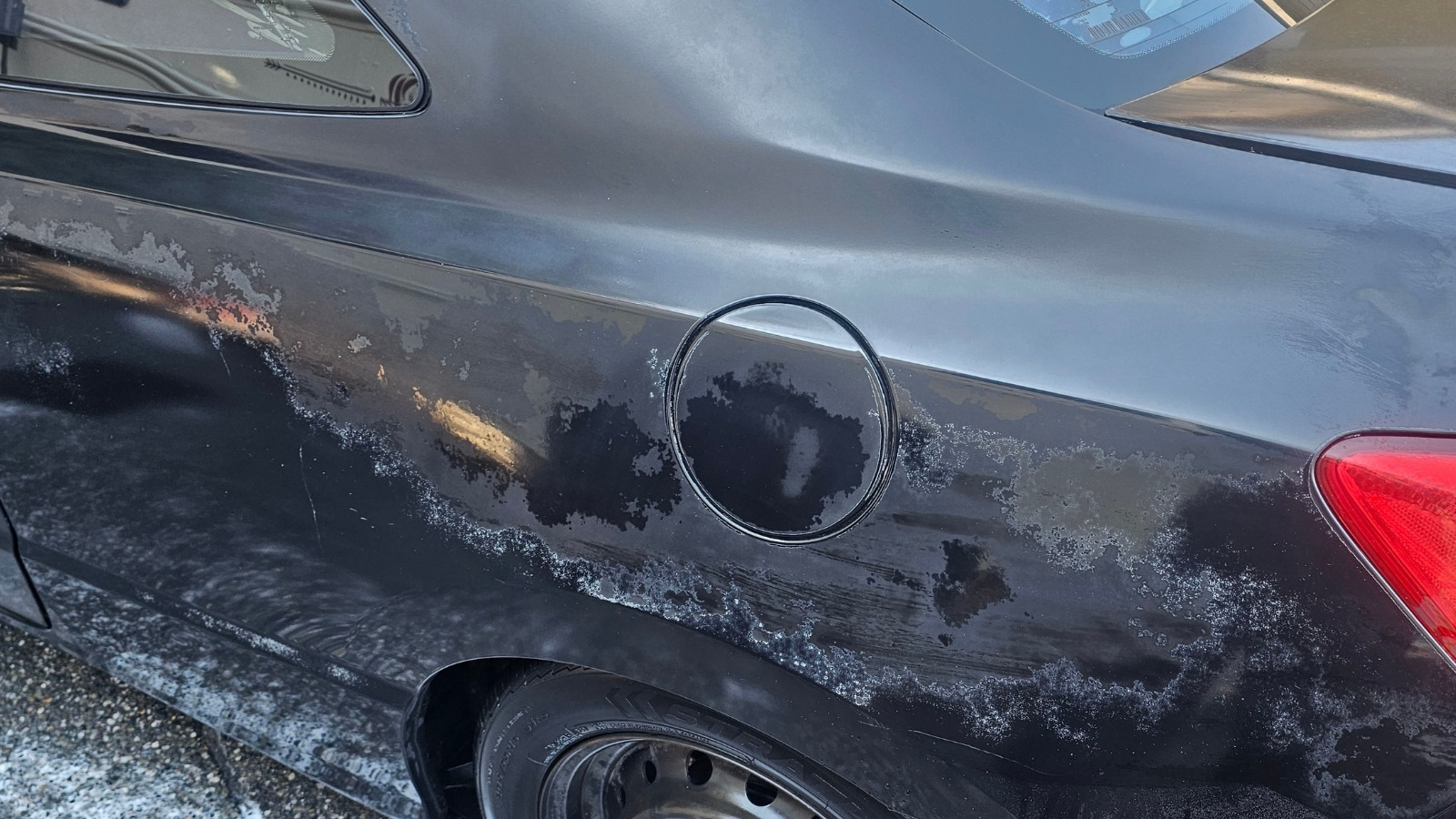
Years of improper maintenance, harsh washing methods, oxidation, and neglected protection can eventually lead to irreversible clear coat failure.
Why Professional Equipment Helps
Pressure washers, foam cannons, filtered water systems, forced air drying tools, specialized chemicals, and multiple wash mitts all help detailers clean vehicles more safely. Those tools reduce friction and improve contamination removal significantly.
That does not mean home washing automatically ruins a vehicle. Safe home washing still comes down heavily to process and habits. The goal is not perfection. The goal is reducing unnecessary damage and protecting the vehicle better than quick washes or improper methods would.
This is also one reason many vehicle owners end up researching how to tell the if they have been hiring a car wash service vs a professional detailer because they begin noticing major differences in their long-term paint condition.
Why A Proper Pre-Rinse Matters
One of the biggest mistakes people make is immediately touching the paint. Many vehicle owners spray soap onto a dry vehicle and begin scrubbing immediately. That process drags contamination directly across the surface. A proper pre-rinse helps loosen and remove debris before physical contact begins. Pressure washers and foam cannons help significantly, but they are not required. A standard garden hose can still improve the process substantially when used correctly.
How To Pre-Rinse Without a Pressure Washer
If you do not have professional equipment, focus on thoroughly soaking the vehicle first. Allow water to run across the surface long enough to soften buildup and carry away loose contamination. Start at the top of the vehicle and work downward. Spend extra time rinsing:
- rocker panels
- wheel wells
- bumpers
- behind tires
- grills
- rear hatch areas
These areas usually hold the heaviest contamination. The longer contamination sits dry on the paint, the more aggressive the wash process often becomes later.
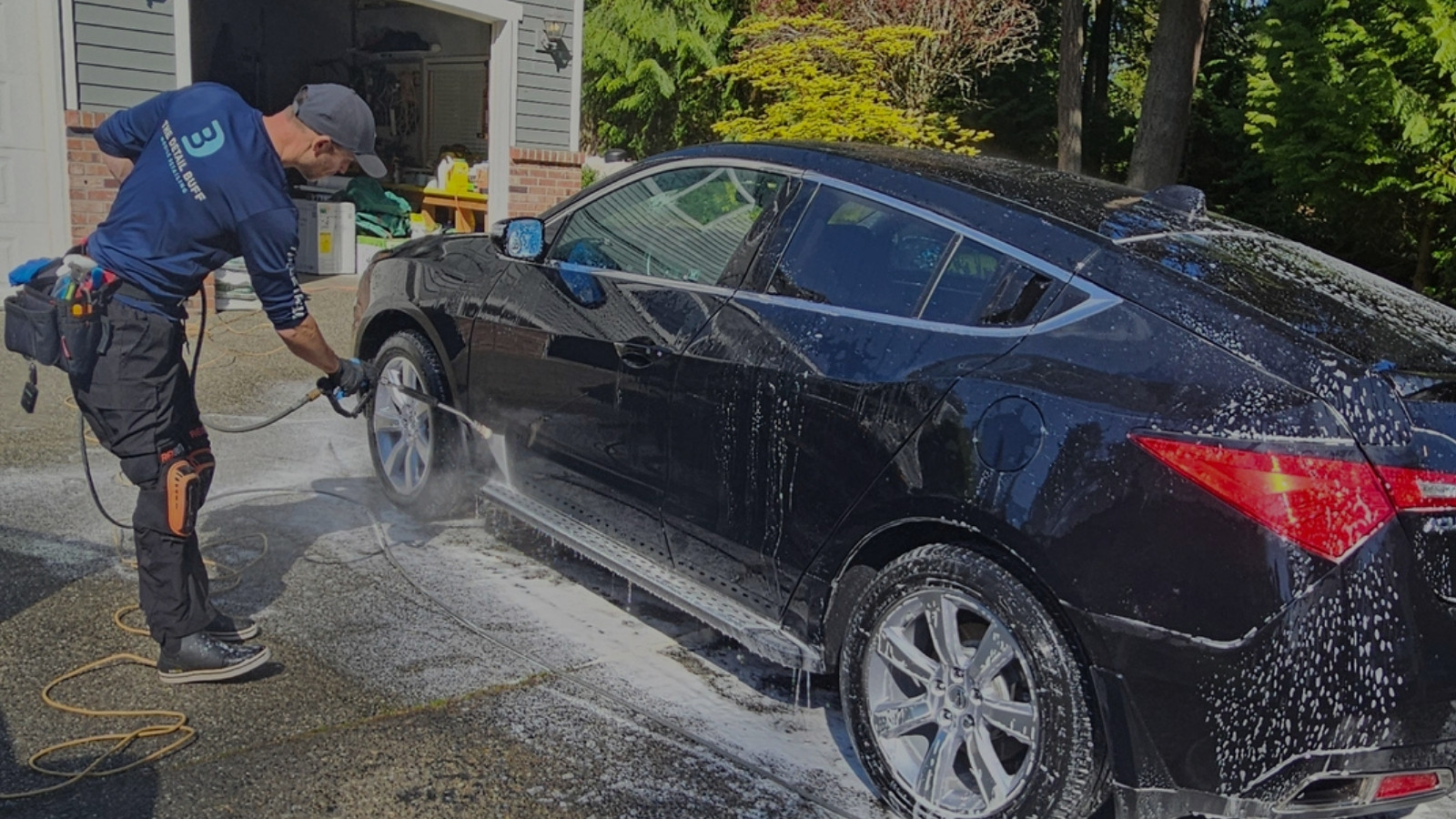
A proper pre-rinse helps remove loose contamination before wash media touches the paint.
Keep Wheel Tools Separate from Paint Tools
Wheels collect some of the heaviest contamination on the entire vehicle. Brake dust, road grime, metallic particles, and debris build up on wheel surfaces much faster than on paint.
Using the same towels, brushes, or wash mitts on both wheels and paint increases the chance of scratching the vehicle.
Even if a towel looks clean, small debris can remain trapped in the fibers.
Use Separate Buckets, Mitts, and Towels
Wheel-cleaning supplies should stay completely separate from paint-safe supplies. This includes:
- wheel brushes
- wheel mitts
- drying towels
- buckets
- detailing brushes
Many vehicle owners color-code their towels and mitts to avoid accidental cross-contamination.
At minimum, wheel tools should never return to painted surfaces after touching brake dust or wheel barrels.
Clean Wheels Before Washing Paint
Cleaning wheels first helps prevent splashing contamination back onto freshly washed paint later in the process.
It also allows:
- wheel cleaners to rinse away fully
- brake dust to flush off early
- dirtier tools to stay isolated from paint-safe areas
This simple step helps reduce unnecessary contamination transfer during the wash process.
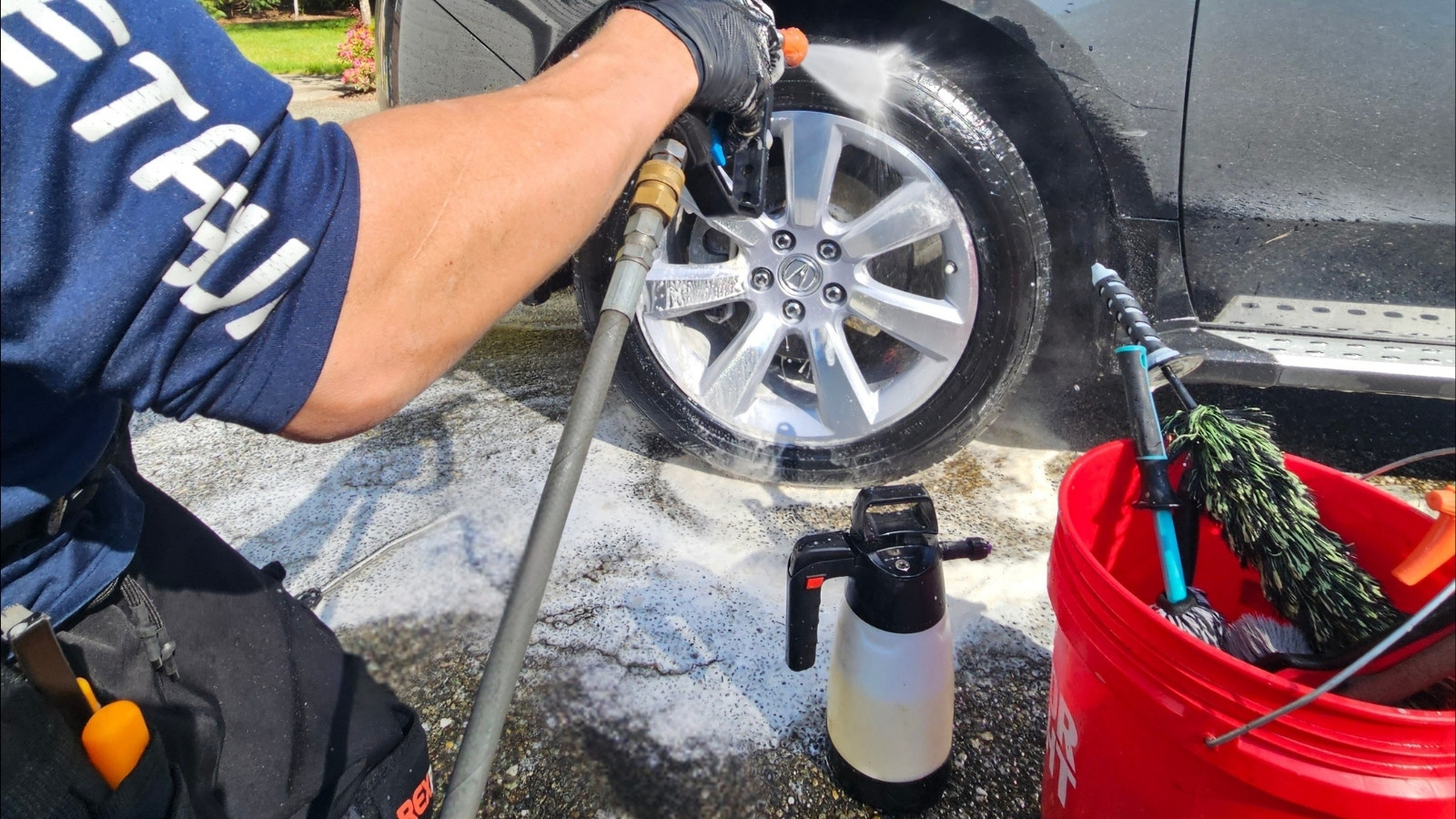
Separate wheel-cleaning tools help reduce cross-contamination and lower the risk of scratching vehicle paint.
The Two-Bucket Method Helps Reduce Scratches
The two-bucket method helps reduce the amount of dirt being dragged back across the paint. One bucket holds clean soap water. The second bucket holds rinse water for cleaning out your wash mitt before it goes back into the soap.
How To Use the Two-Bucket Method
Step 1: Fill one bucket with clean water and car-safe soap.
Step 2: Fill the second bucket with clean rinse water.
Step 3: Place a grit guard at the bottom of each bucket if you have them.
Step 4: Rinse the vehicle thoroughly before touching the paint.
Step 5: Dip your clean microfiber mitt into the soap bucket.
Step 6: Wash one small section using straight-line motions and light pressure.
Step 7: Rinse the dirty mitt in the rinse bucket before returning it to the soap bucket.
Step 8: Reload the mitt with clean soap and move to the next section.
This process helps keep loose dirt and grit out of your soap bucket. It also lowers the chance of rubbing contamination back across the paint.
Why Grit Guards Help
A grit guard sits at the bottom of the wash bucket and helps separate contamination from the wash mitt.
As dirt and debris rinse out of the mitt, the grit guard helps keep heavier contamination lower in the bucket instead of circulating back into the wash media.
This reduces the chance of rubbing debris back across the paint during the wash process.
While grit guards are not perfect by themselves, they help reduce contamination transfer when combined with proper rinsing and multiple wash mitts.
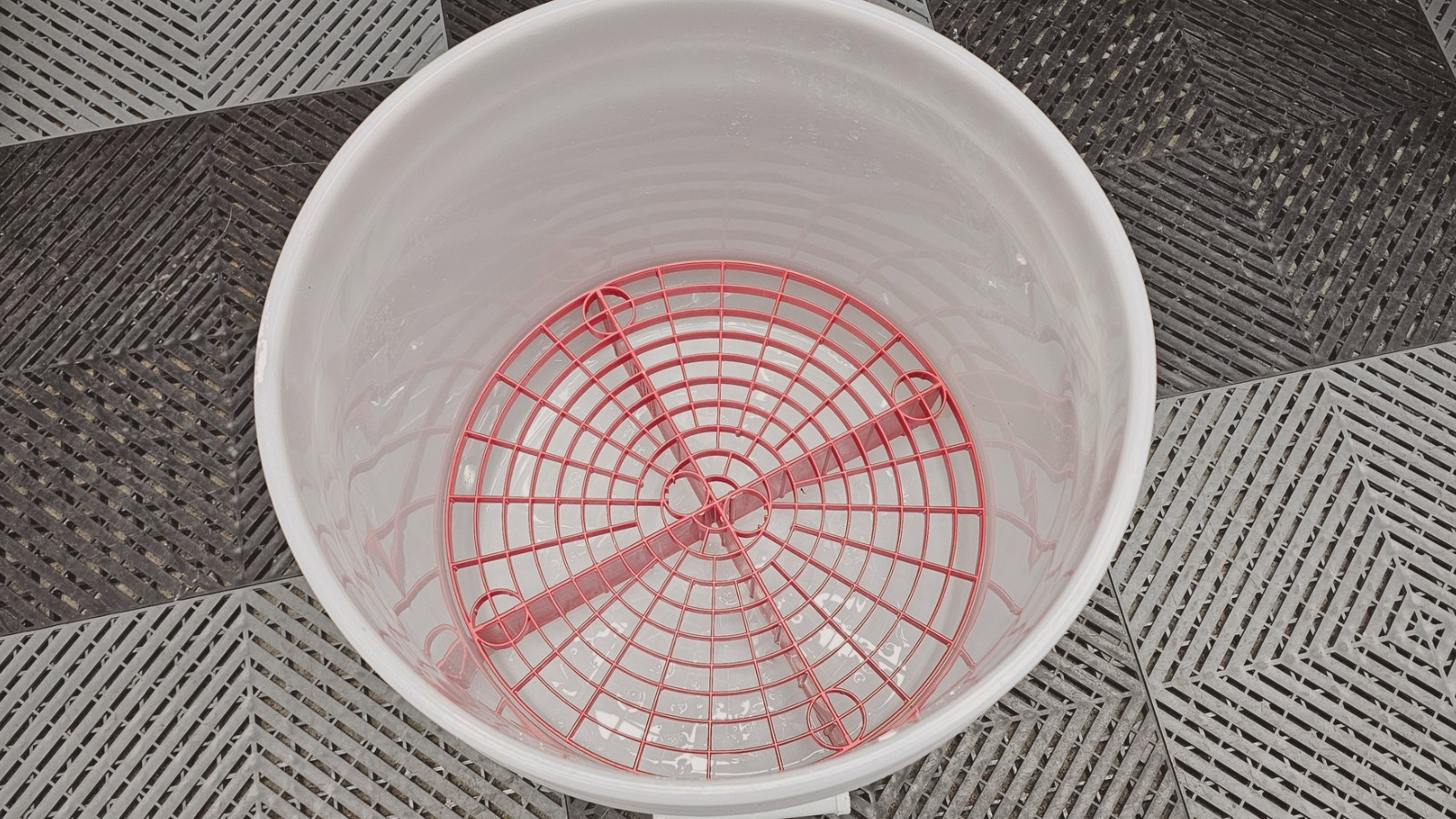
Grit guards help separate contamination at the bottom of the bucket instead of recirculating debris back onto the paint.
Use Multiple Wash Mitts Whenever Possible
Many people use one mitt for the entire vehicle. That increases contamination transfer heavily. Using multiple microfiber wash mitts helps isolate dirt more safely. We often rotate mitts throughout a wash process instead of continuously reusing the same one. For example:
- one mitt for upper panels
- one for lower panels
- one for rear sections
- one for heavily contaminated areas
This helps reduce debris being transferred across cleaner paint.
Avoid Circular Scrubbing Motions
Circular scrubbing patterns increase visible swirl marks significantly. Straight-line motions are generally safer. Work gently across the surface instead of aggressively scrubbing.
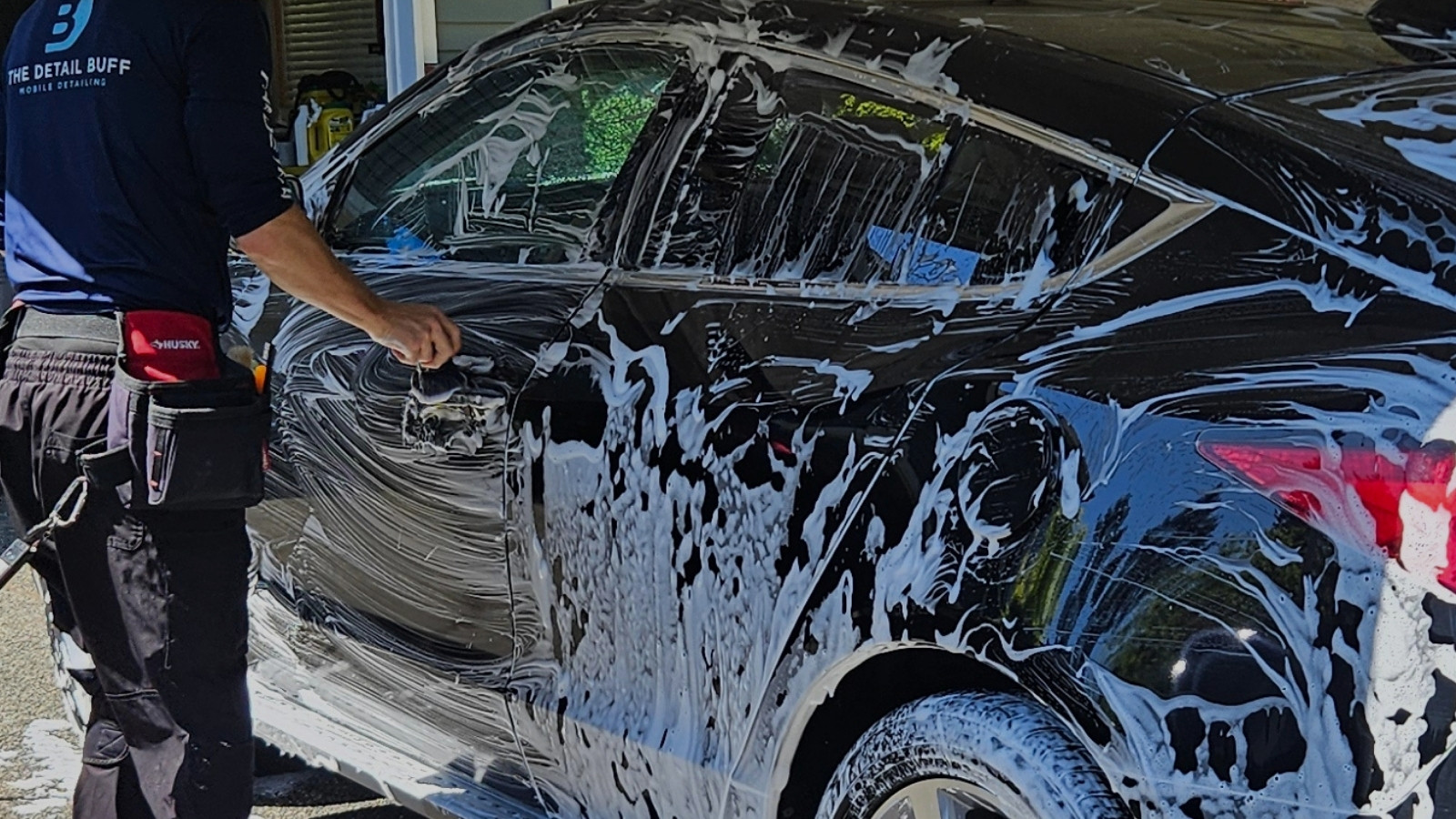
Washing in controlled straight-line motions helps minimize circular scratching patterns and reduces unnecessary paint marring over time. If contamination does not release easily, forcing it usually creates damage. This is another reason proper rinsing matters so much before physical contact begins.
Why The Right Brushes Matter
Small cracks, emblems, trim edges, lug areas, and body seams trap contamination that standard washing often misses. Soft automotive detailing brushes help clean these tighter areas more safely without damaging sensitive surfaces.
Improper brushes or stiff bristles can scratch gloss black trim, softer paint systems, and delicate surfaces quickly. This becomes especially important on vehicles protected with ceramic coating protection or paint protection film.
Why Dirty Microfiber Towels Cause Damage
Microfiber towels and wash mitts require proper care. Many people unknowingly reuse contaminated towels repeatedly. Once dirt becomes trapped inside the fibers, the towel itself can begin scratching the paint.
Wash microfiber towels separately from regular laundry whenever possible. Avoid fabric softeners. Allow towels to fully dry before storing them. Replace towels once they become rough, worn, or heavily contaminated.
These small details help explain why detailing prices vary between different service levels and processes.
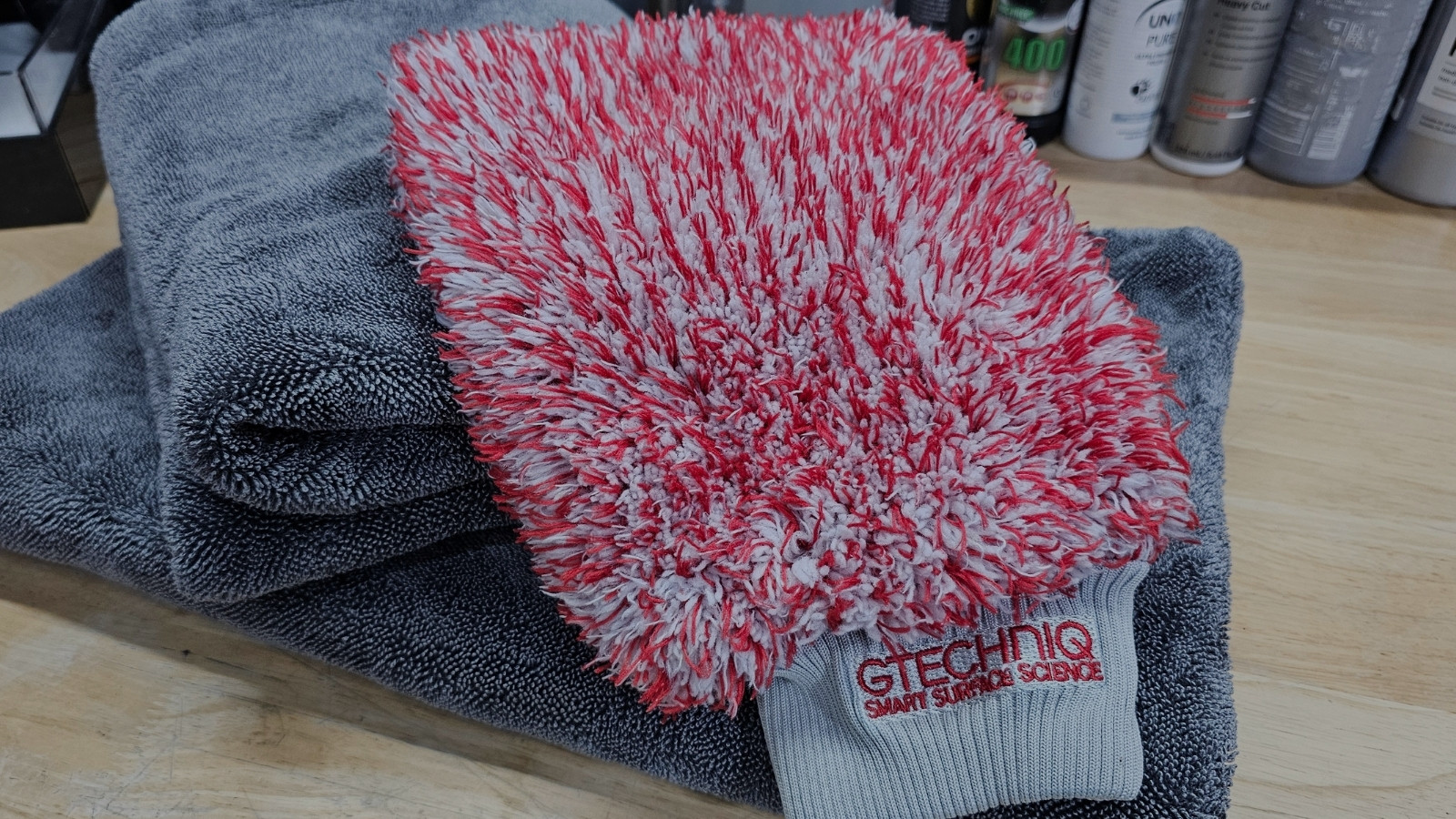
Proper microfiber maintenance helps reduce contamination transfer and unnecessary scratching.
Why Forced Air Helps Reduce Drying Damage
Drying creates friction too. Even after a vehicle has been safely washed, aggressive towel drying can still introduce micro marring if contamination remains on the surface. Forced air helps reduce direct contact during the drying process.
Professional detailers often use filtered air systems or specialized blowers to safely push water out of:
- mirrors
- emblems
- grills
- trim edges
- body seams
At home, even a leaf blower can help reduce towel contact if used carefully. If using a standard leaf blower:
- avoid dragging hard plastic tips across the paint
- use a rubber tip when possible
- keep the nozzle away from the surface
- make sure the blower itself is clean and not blowing debris
Reducing friction during drying helps minimize unnecessary towel contact and lowers the chance of adding swirl marks after the wash is already complete.
Why Proper Drying Towels Matter
A lot of vehicle owners unknowingly damage paint during the drying stage. We regularly see people using bath towels, beach towels, old household towels, or rough fabrics to dry their vehicle after washing. Those materials are not designed for automotive paint.
Many household towels use rougher fibers that can create scratching, drag contamination across the surface, and leave behind unnecessary micro marring over time. A proper microfiber drying towel is specifically designed to reduce friction and absorb water more safely.
Dedicated drying towels should:
- stay clean
- remain separate from wheel towels
- avoid touching the ground
- be washed properly after use
- only be used for paint-safe drying
Even small drying habits can make a major difference in long-term paint condition.
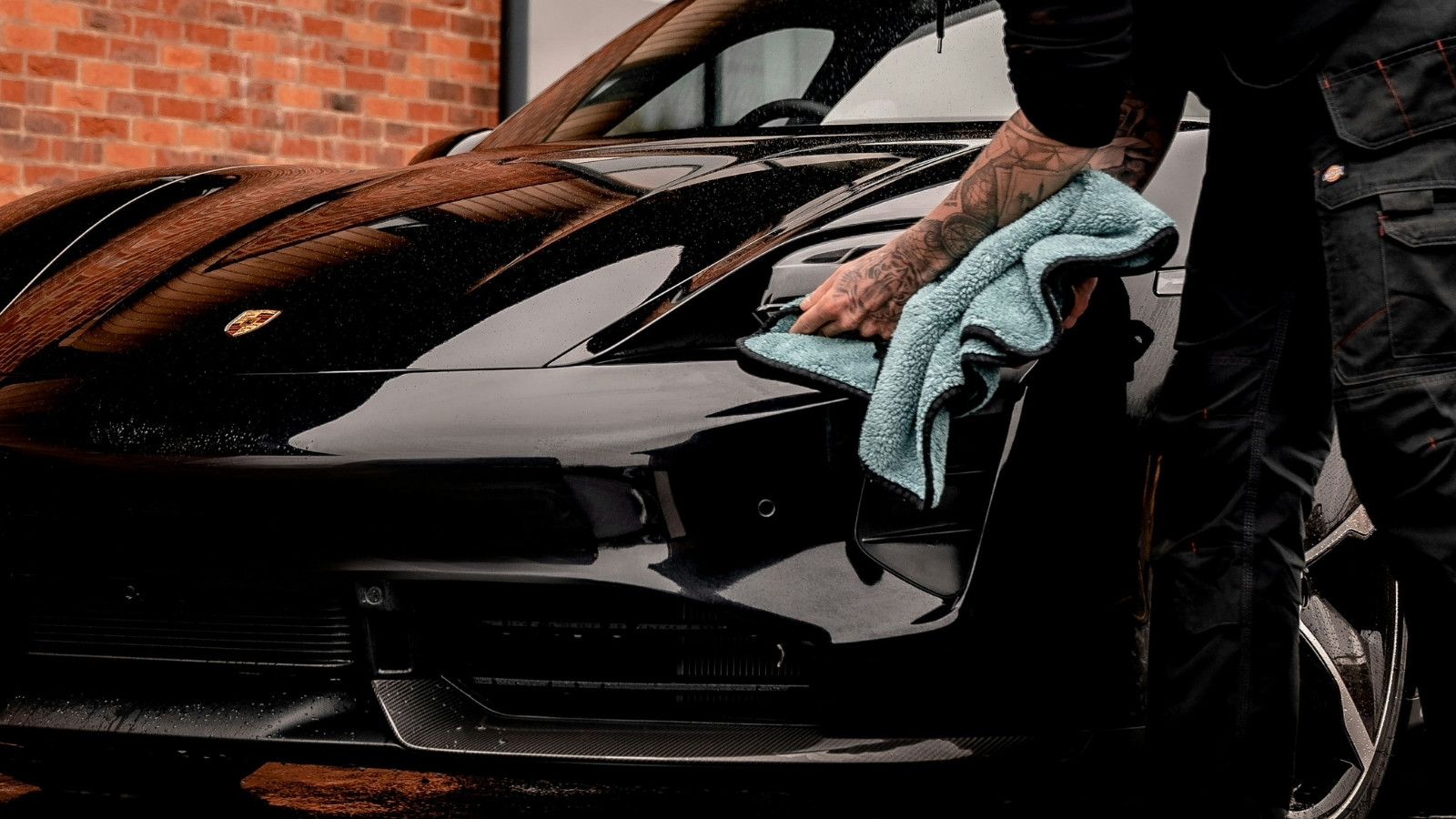
Proper microfiber drying towels help reduce friction and minimize unnecessary scratching during the drying process.
Why Washing In Direct Sunlight Creates Problems
Time of day matters more than many people realize. Mid-afternoon washing in direct sunlight usually creates the highest risk for water spotting and uneven drying. Hot paint causes water and soap to evaporate too quickly.
That increases:
- water spotting
- streaking
- soap residue
- mineral buildup
- drying issues
Early mornings, evenings, or shaded areas usually create much safer washing conditions. Cooler surfaces allow products to work longer and rinse more safely.
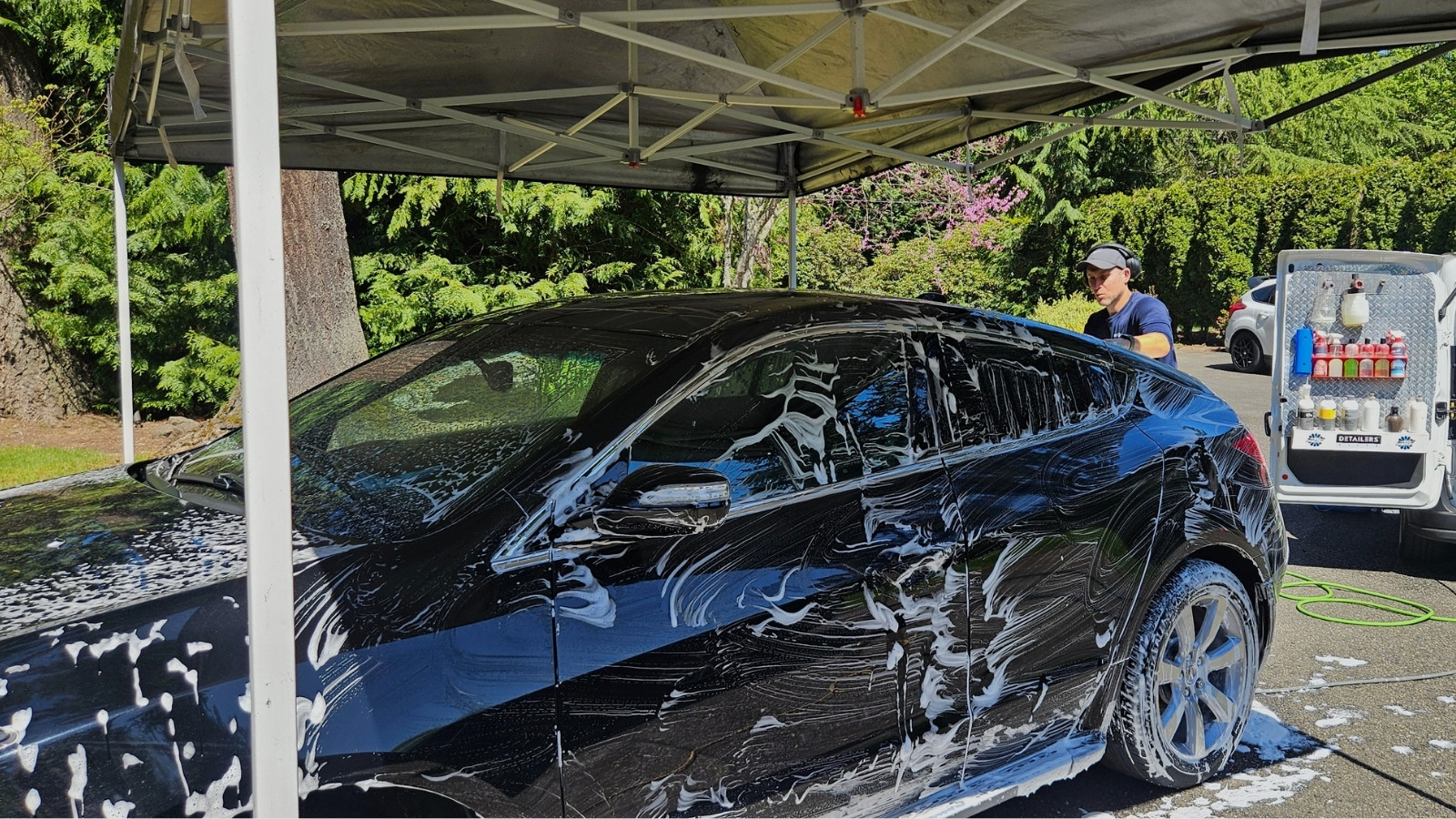
Cooler surfaces and shaded conditions help reduce water spotting and uneven drying.
How To Wash More Responsibly At Home
Many vehicle owners want to protect their vehicle while also protecting their community. Simple adjustments during a wash can help reduce unnecessary runoff entering storm drains.
Whenever possible:
- wash on gravel
- wash on grass
- wash where water can absorb naturally
- avoid heavy runoff toward drains
- use flatter areas when possible
Many licensed detailing companies must maintain pollution prevention and runoff management plans while operating legally. Protecting local waterways matters whether washing at home or professionally.
Why Surface Cleaning Is Different from Proper Maintenance
A vehicle can appear clean while still holding contamination underneath the surface. Quick washes often focus heavily on appearance. True maintenance focuses on preserving the vehicle safely long term.
This is one reason many owners eventually search for information about how often to detail your car after realizing surface cleaning alone does not fully maintain the vehicle.
Safe maintenance habits help reduce unnecessary wear between professional services.
Ceramic Coatings Still Require Proper Washing
Many people believe coatings eliminate maintenance completely. That is not true. Proper washing still matters heavily even with ceramic coatings.
Coatings help:
- reduce contamination bonding
- improve cleaning efficiency
- improve hydrophobic behavior
However, improper washing can still create swirl marks over time. The coating helps protect the surface better, but it does not make the paint invincible. This is also why understanding wax or paint correction becomes important when swirl marks and defects eventually begin showing through the finish.
Final Thoughts
You do not need a professional detailing setup to improve how you wash your vehicle at home. The process matters more than most people realize. Reducing friction, improving rinsing, using proper towels, avoiding contaminated brushes, and washing during safer conditions can dramatically reduce long-term paint damage.
Professional detailing still provides the safest and most thorough results long term. However, if regular professional washing is not always realistic, learning safer home washing habits can help minimize unnecessary damage and better protect your investment between appointments.
You can also read our customer reviews to see real experiences from local vehicle owners throughout Snohomish County.
If your vehicle already shows swirl marks, scratches, buildup, or contamination concerns, contact The Detail Buff to learn more about safe correction and maintenance options.