
When comparing car wash services vs detailing, most people assume they are getting the same result at different price points. That assumption creates one of the biggest misunderstandings in vehicle care.
At a glance, both services can make a car look clean. Over time, the difference in process leads to very different outcomes.
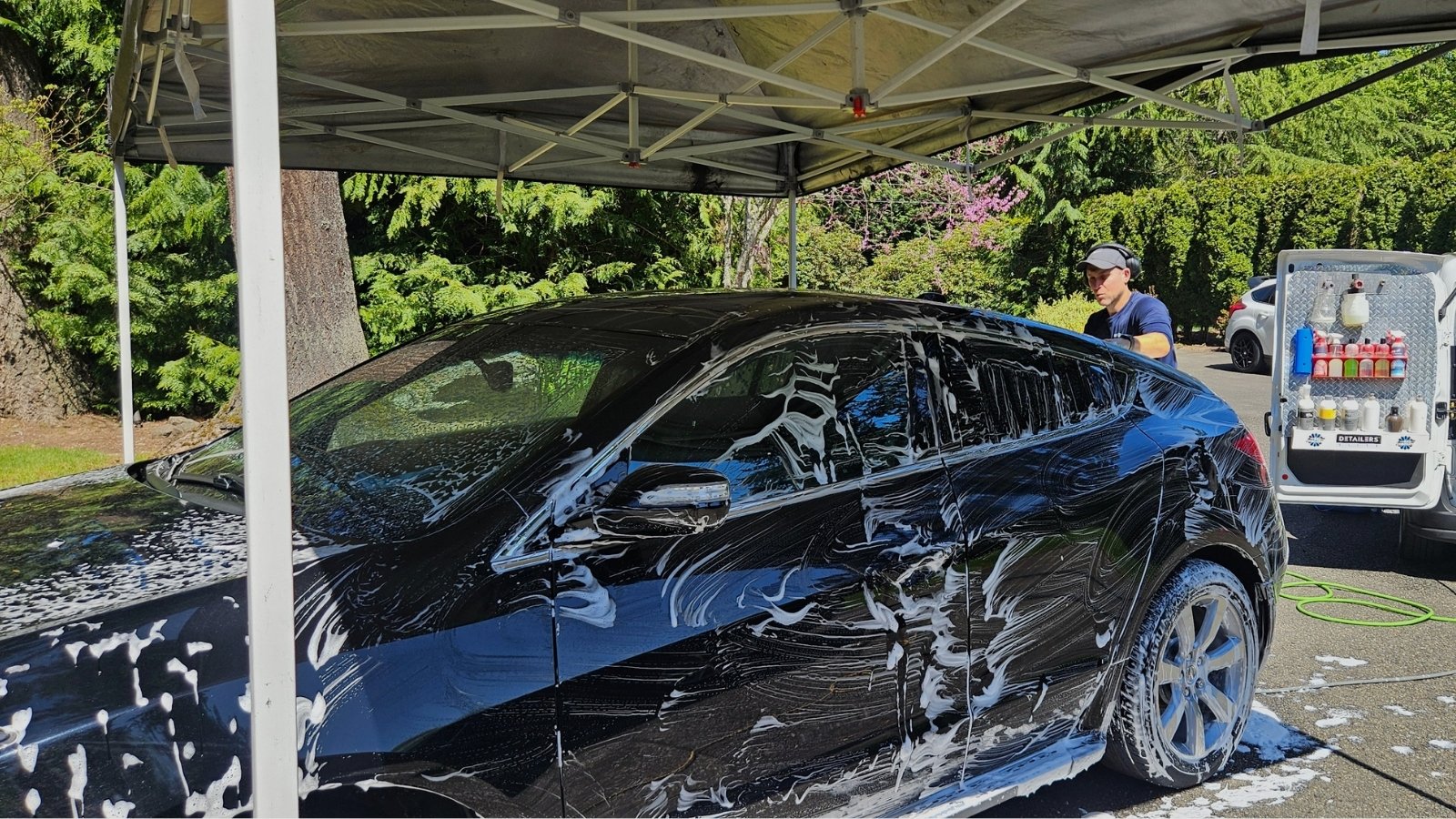
Why Car Wash Services vs Detailing Feels So Confusing
The confusion comes from how services are presented to customers. Many providers use similar language, even when the work performed is very different. Terms like “interior detail,” “deep clean,” or “hand wax” sound professional. Those terms create the expectation that the vehicle is being thoroughly restored.
In reality, those same terms can describe anything from a quick surface clean to a full car detailing process. Without context, it becomes difficult to tell the difference.
Surface Cleaning vs Detailing: What Actually Changes
Understanding the difference between a car wash service and professional detailing starts with what happens below the surface. The difference is not just time—it is depth and process.
What Surface Cleaning Looks Like
Surface cleaning focuses on visible improvement. It includes vacuuming, wiping, washing, and applying products that enhance appearance. The vehicle looks cleaner when the service is finished. That visual improvement often meets expectations in the moment. However, most of the work stops at what you can see.
What a Professional Detailing Service Does Differently
A true professional detailing service focuses on removing buildup, not just improving appearance. It addresses contamination that sits within materials and on the paint surface. This includes embedded dirt in carpets, buildup in cracks and crevices, and bonded contamination on exterior surfaces. These are areas that require more time, more process, and more attention. That deeper approach is what defines deep car cleaning, not just the final look.
Car Wash vs Detailing: Where the Real Difference Shows Up
The biggest difference appears when a vehicle has buildup that is not fully addressed but instead worked around at the surface level. This is where shortcuts start to matter. Any vehicle can be cleaned to look good on the surface. That does not mean it has been properly cleaned or maintained in a way that protects its long-term condition.
This is similar to maintaining a vehicle by repeatedly topping off old oil instead of replacing it. It may continue to run, but over time, the condition declines because the underlying issue was never fully addressed.
Interior Example: Seat and Carpet Extractions Bundled into Standard Packages
A vehicle with stained seats may look significantly better after a quick treatment. The visible surface improves, which gives the impression that the issue has been resolved.
However, most of the contamination remains below the surface without proper extraction. That buildup stays trapped in the material and continues to affect the condition of the interior. Over time, this leads to lingering odor, faster wear, and a vehicle that never feels fully clean.
Why Interior “Deep Cleaning” Can Be Misleading
In many car wash services, deeper processes like seat or carpet extraction are often included in the description because they sound like added value. In reality, properly extracting interior materials is time-intensive. It also requires the right equipment and enough time for moisture to be removed safely.
What Happens When That Process Is Rushed
To fit these services into shorter appointment times, the process is often simplified. Instead of fully removing buildup from within the material, the cleaning may only address the surface. This can include light treatment and agitation that improves how the seat looks, without fully cleaning what is embedded below.
When done correctly, seats and carpets should not be left wet. That requires controlled cleaning, proper suction, and time spent managing moisture removal. If no mention of drying time is included when discussing these services, and just added into a standard package, the extractions may be more at a surface level to allow quick drying rather than true extractions.
The result can look clean at first. Underneath, however, the deeper contamination remains.
Why Equipment and Setup Matter
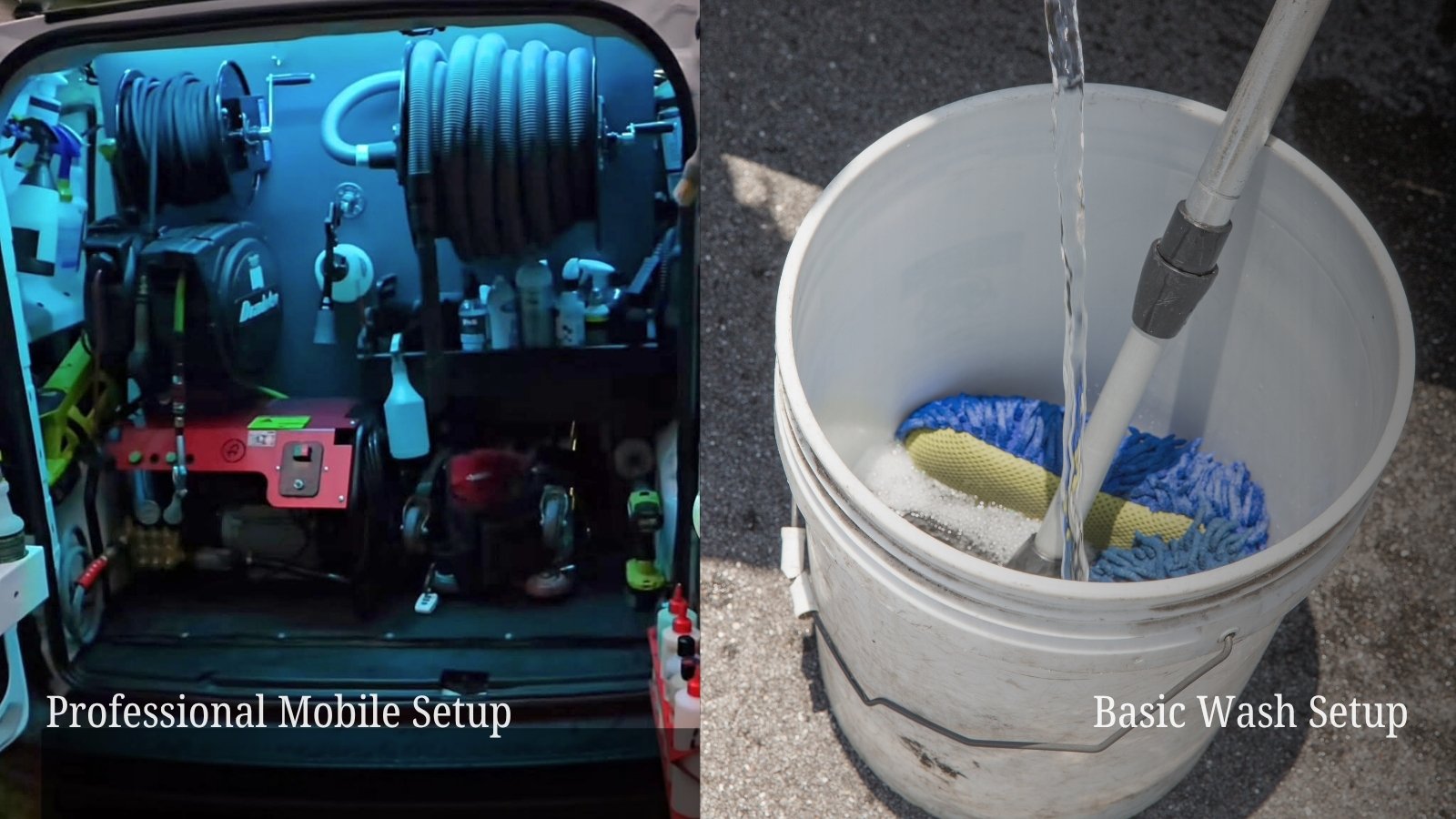
Proper interior detailing relies on more than just technique. It also depends on having the right equipment and the ability to run it consistently. High-level extraction, air systems, and deep cleaning tools require sufficient power and a controlled setup to perform correctly. These processes are designed to work together, not in isolation.
In mobile detailing, this becomes especially important. A properly equipped mobile setup should function as a complete system, capable of delivering the same level of work regardless of location. When a setup relies on external power or water from the client’s home, the process may be limited by what is available at that location. Household outlets and water access are not always designed to support multiple high-demand tools running at the same time.
In those situations, the process may be adjusted to fit those limitations rather than performed at its intended level. This can create inconsistencies where one vehicle receives a different level of service than another, even when the same service is being offered.
Professional detailing is built around consistency. The setup should allow the same level of work to be performed every time, not vary based on the environment it is performed in. This is one reason why some services appear similar on paper but produce very different outcomes in practice. The difference often comes down to how the setup is built and what it’s capable of running consistently.
Why It Still Feels Like a Good Service
Even when the process is simplified, the vehicle still looks better after the service. That visual improvement creates the impression that a full deep clean was completed. Because the deeper contamination is not immediately visible, it becomes difficult to tell the difference between a surface clean and a properly executed detail.
This is one of the most common ways surface-level cleaning is presented as deep cleaning, even when the underlying material has not been fully addressed.
Exterior: Why Preparation Matters More Than Products
The process leading up to protection matters just as much as the product itself. Wash technique, tools used, and how the surface is handled all affect the condition of the paint. These steps determine whether the surface is being properly cleaned—or simply made to look better.
Without that foundation, even services that improve appearance can contribute to long-term wear instead of preventing it. Even when a vehicle looks clean after a wash, that does not always mean the surface has been fully reset. In many cases, buildup can remain on the paint that is not immediately visible. This is where proper preparation becomes critical.
Exterior Example: When Protection Is Applied Without Proper Preparation
When certain types of protection are applied without proper preparation, the issue is not the product itself. The issue is the condition of the surface underneath it and how that product is being applied. Some protection methods can be safely applied to a surface that has not been fully decontaminated, such as a spray wax. Others require a properly prepared surface to avoid affecting the paint.
If contamination has not been removed first, the paint still holds embedded particles, your paint would feel like sandpaper if you ran the back of your hand along it. If your paint is in this condition after washing it, it should not receive a “hand wax” or machine-applied wax service until a decontamination process has been completed. When a machine or aggressive application method is used at this stage, it is no longer working on clean paint. It is working across that embedded contamination. This moves those particles across the surface, leading to micro-scratching, swirl marks, and a gradual loss of clarity over time.
Why This Still Looks Like a Good Result
In many cases, the finish still looks improved immediately after the service.
Wax can enhance gloss, darken the paint, and hide imperfections. Which can be an acceptable option for clients that aren’t ready to invest in paint corrections or longer-term protections like ceramic coatings and paint protection film. That visual improvement builds confidence in the service that was performed, but is hiding the underlying decline of your paint that this process causes if there is improper prep.
When “Hand Wax” Sounds Like More Value
This is where many vehicle owners can be unintentionally misled.
Terms like “hand wax” or machine-applied wax often sound like a higher level of care. The process looks more advanced, and it is commonly presented as an upgrade over simpler protection methods. However, that type of application is not meant to be performed on an unprepared surface. When a service includes a machine-applied wax “hand wax”, proper preparation should also be part of that process. This typically includes decontamination to remove bonded buildup before any machine contact is introduced.
If that step is not included, the process is being performed out of sequence. Understanding that sequence can help you recognize when a service may not be aligned with proper paint care.
Why This Happens With Some Car Wash Services
In lower-cost services, preparation steps are often skipped because they require more time and a more involved process, and sometimes it is just lack of paint knowledge from the service provider. Instead, protection may be applied directly after washing because it improves appearance quickly and fits within shorter service times. This can create a situation where higher-level steps are included in the description of a service to appear has a high end added value but are not supported by the preparation required to perform them properly.
In contrast, simpler protection methods applied appropriately can provide safer and more consistent results when the surface has not been fully reset.
The Long-Term Impact of Surface Cleaning
When a vehicle is maintained with surface-level services over time, the condition gradually shifts. Contamination continues to build instead of being removed. Materials wear faster, paint loses clarity, and interiors hold onto embedded debris. What once required basic maintenance may eventually require more intensive work.
At a certain point, standard detailing is no longer enough. More advanced services, such as the paint correction process, may be needed to restore the surface properly.
Why Pricing Feels So Different
One of the biggest questions is price. On the surface, services can appear similar while costing very different amounts. A surface clean takes less time and follows fewer steps. That allows it to be offered at a lower cost. A true detail requires more time, more process, and more precision. That difference in approach directly affects pricing.
If you want a deeper breakdown, you can read more about why detailing prices vary and how process impacts cost.
What Most Vehicle Owners Don’t Realize
There is no universal standard for what qualifies as detailing. Anyone can use the term, regardless of process or experience. This makes it difficult to compare services based on description alone. Two offerings can sound identical while producing completely different results.
Learning how to choose a detailer can help you understand what to look for and avoid services that only provide surface-level results. If you’re interested in learning more on how to choose a detailer check out our article on 10 Red Flags to Watch for When Choosing a Detailer.
Why Car Wash Service vs Detailing Matters Long-Term
The difference between a car wash service and professional detailing is not just about how your vehicle looks today. It affects how it holds up over time. Surface cleaning improves appearance temporarily. Proper detailing improves the condition of the vehicle itself.
That difference impacts durability, value, and how much work is required to maintain or restore the vehicle later.
Final Thoughts
Understanding when a car wash service is presented as detailing can help you make better decisions about how your vehicle is cared for. The right approach depends on condition, not just price. If you are unsure what your vehicle actually needs, exploring professional detailing services can help you understand the level of care required.
For real results and feedback from other vehicle owners, you can also read our customer reviews and see the difference proper detailing makes.
We proudly serve Marysville, Arlington, Lake Stevens, Snohomish, and surrounding Snohomish County communities.