
When choosing a car detailer in Snohomish County most people choose a car detailer based on price, availability, or convenience. But the reality is, not all detailing services are the same. Two businesses can offer what sounds like the same service, while delivering completely different results. If you don’t know what to look for, it’s easy to assume everything is equal, and that’s where mistakes happen. Before choosing a detailer, here are ten red flags to be aware of.
Red Flag #1: “Mobile” Without the Right Setup
Some companies advertise as “mobile,” but still rely entirely on your water and power.
The Difference in Capability
That setup could work for basic cleaning, but it limits how detailers use their equipment and how efficiently and properly they complete the process — especially for more involved services.
Why It Matters
A fully equipped mobile setup delivers consistent, controlled results and keeps the process independent of the environment or available resources. When you are dependent on the locations resources it leads to inconsistent results where one vehicle’s location could mean it gets a more in-depth detail than another, even though the price may be consistent.
Red Flag #2: Pricing and Services Given Without Understanding the Vehicle
Every vehicle requires a different level of work. Condition, usage, buildup, and time since the last detail all affect how the process should be performed. If pricing or services are given quickly without understanding the vehicle, the work is not being built around what it actually needs.
That’s where results start to fall short.
No questions about the vehicle before pricing
A starting quote should come from at least a basic understanding of the vehicle’s condition. If no questions are asked other than type of vehicle and a price is given immediately, it’s usually not based on the amount of work required.
That often leads to the process being simplified to fit the price instead of the vehicle.
Offering the same service without any questions
Not every vehicle needs the same level of work. A well-maintained car and one with heavy buildup require completely different approaches. If the same service is recommended without asking about condition, the process is being standardized instead of adjusted.
Low starting prices without any real understanding of the vehicle
A starting quote isn’t the issue. The difference is how that number is determined. If a detailer asks detailed questions about condition, usage, and buildup, that quote is being built around the work your vehicle actually needs — even if it’s not exact until they see it in person.
But if the price is given quickly with little to no information based only on the type of vehicle and a vague description, it’s usually not tied to the actual condition.
That’s where problems start.
Those lower starting prices often don’t account for the time and process required, which means one of two things happens:
- the work is simplified to fit the price
- or the prices changes significantly once the vehicle is seen
This is why a slightly higher, well-informed quote is often more accurate than a low number given without context. The goal isn’t to hear the lowest price upfront — it’s to have the work and the price align once the job is actually done.
Red Flag #3: Everything Included for a Low Price
If a package includes everything at a surprisingly low price, you are not getting more — the service is most likely being simplified.
Why Certain Services Don’t Belong Together
Different detailing services require different levels of time, attention, and process. Combining deep interior cleaning, extraction, and paint correction into one quick package often means the detailer performs none of them at the level they should be.
Real World Example
Full interior extraction takes times, not just to perform, but to dry properly. If it’s included in a mobile all-in-one service, there usually isn’t enough time built in for both.
That often means the cleaning is done more at the surface level so it can dry faster, which looks good initially but doesn’t fully remove the deeper buildup.
What to Watch For
If a package bundles everything together with little explanation, pay attention to how the company explains each step. Reassuring answers may sound right, but they don’t always match the time, process, or conditions required to do the work properly.
Red Flag #4: Tools & Products That Don’t Match the Service
There’s a big difference between a quick car wash service and professional detailing, and the tools and products detailers use often show it.
The Difference Between Cleaning and Detailing
Basic cleaning service focus on speed, not long-term care. This can include using long handled brushes on paint, reusing wash media without proper care, or allowing tools to contact the ground and pick up debris.
Over time, these habits can introduce scratches, contamination, and unnecessary wear — even if the vehicle looks clean at first glance.
Why Proper Process Matters
Professional detailing focuses on protecting the vehicle, not just cleaning it. That means using controlled wash methods, proper tools, and products designed to safely maintain paint, interiors, and finishes over time.
If the setup looks similar to a typical at-home wash – a bucket, basic brushes or sponges, and limited equipment – the service is usually centered around surface cleaning rather than a controlled detailing process.
Red Flag #5: Services Offered Without Proper Conditions
Some services require controlled conditions to deliver safe, consistent results and offering these services mobile is a huge red flag of the experience behind the service provider.
Environmental Limitations
For example, detailers should not perform Paint correction or apply ceramic coatings in direct sunlight or uncontrolled outdoor environments. Direct sunlight, heat, and airborne dust make it harder to work safely and see what’s actually happening in the paint.
Potential Risks
If debris is settling on the surface while polishing, it can get caught between the pad and the paint. This increases the risk of adding new defects during the process. When the surface is already hot, using a machine polisher can increase the risk of overheating or even burning the paint. At the same time, coatings applied in the heat can flash too quickly. This makes it harder to level properly and increases the chance of high spots, which many clients won’t notice until later.
Without proper lighting and a controlled environment, it’s difficult to stay consistent or verify results.
Red Flag #6: Pricing That Feels Too Good to Pass Up
If a price comes in significantly lower than others, especially after you’ve already received multiple quotes, it’s worth asking why.
How Pricing Wins Jobs (and Why That’s a Problem)
Many companies adjust pricing to win jobs quickly. They drop below competitors to make the decision feel easy in the moment, and hard to pass up. To make that pricing work, the business often relies on higher volume. This means more vehicles completed in less time and less attention given to each one.
What That Means for the Result
Detailing is time dependent. The level of buildup, wear, and condition directly affects how long the process takes. If a service is priced low while still promising a full interior and exterior detail, it usually means the work is being compressed to fit that price. That often leads to surface-level cleaning rather than a full reset of the vehicle.
While the vehicle may look clean, the process is often simplified to keep things moving. Many customers feel satisfied simply because it looks better than before, without realizing how much buildup or underlying condition is still there.
A vehicle may look clean without a proper detail, and pricing alone doesn’t tell you the difference.
When Lower Pricing Leads to Surface-Level Results
We’ve seen vehicles arrive after being “professionally detailed” elsewhere that still contained visible mold, greasy residue, trapped debris, and untouched contamination in hard-to-reach areas.
In one case, a vehicle was brought to us the day after another interior service because the interior still felt damp and contamination concerns remained even after scheduling a deep clean with mold remediation at a price they couldn’t pass up. While parts of the vehicle appeared cleaner at first glance, closer inspection revealed missed buildup throughout the interior, including mold still present in multiple areas.
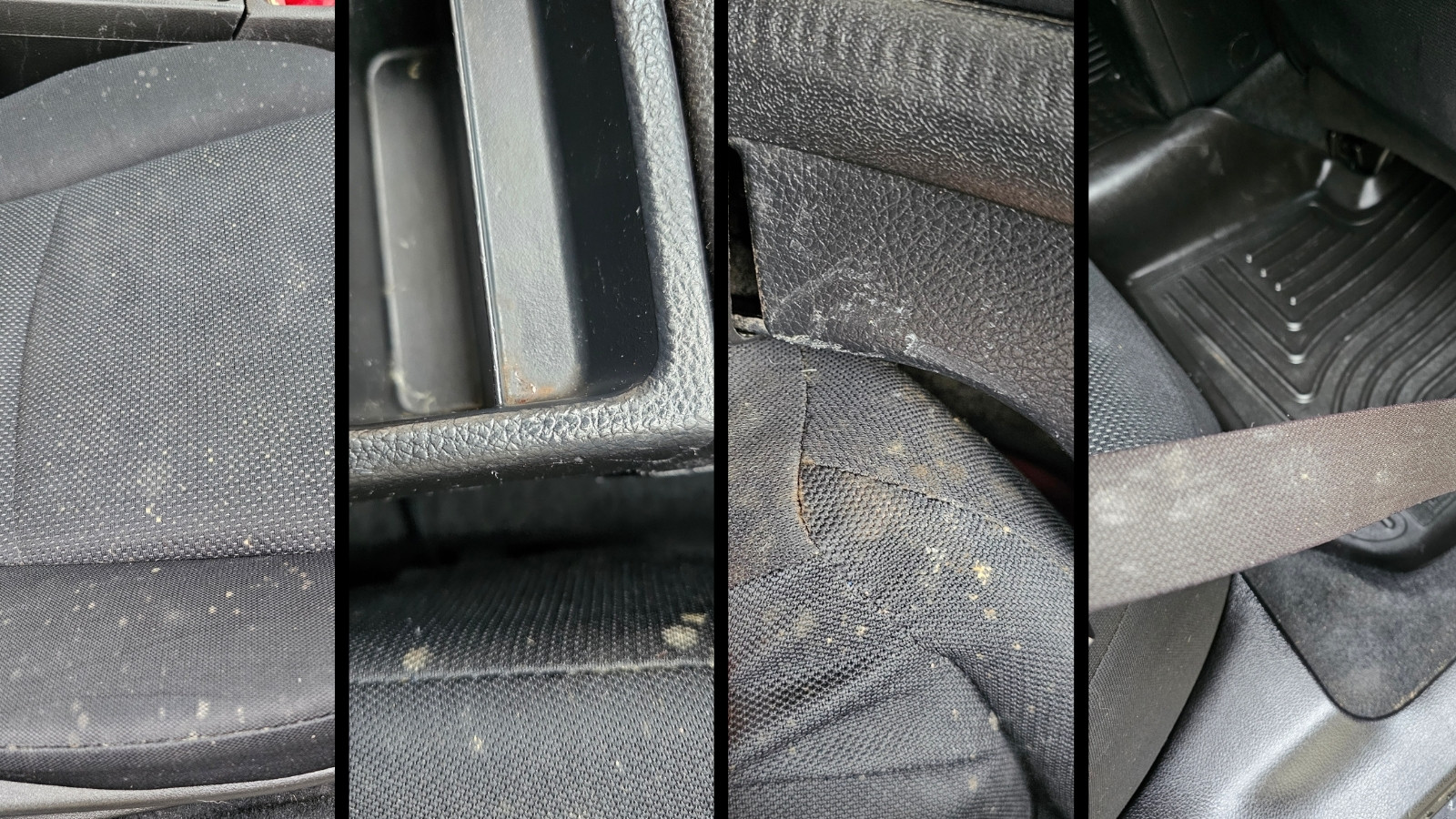
This vehicle had already been “deep cleaned,” but visible mold and contamination were still present throughout the interior.
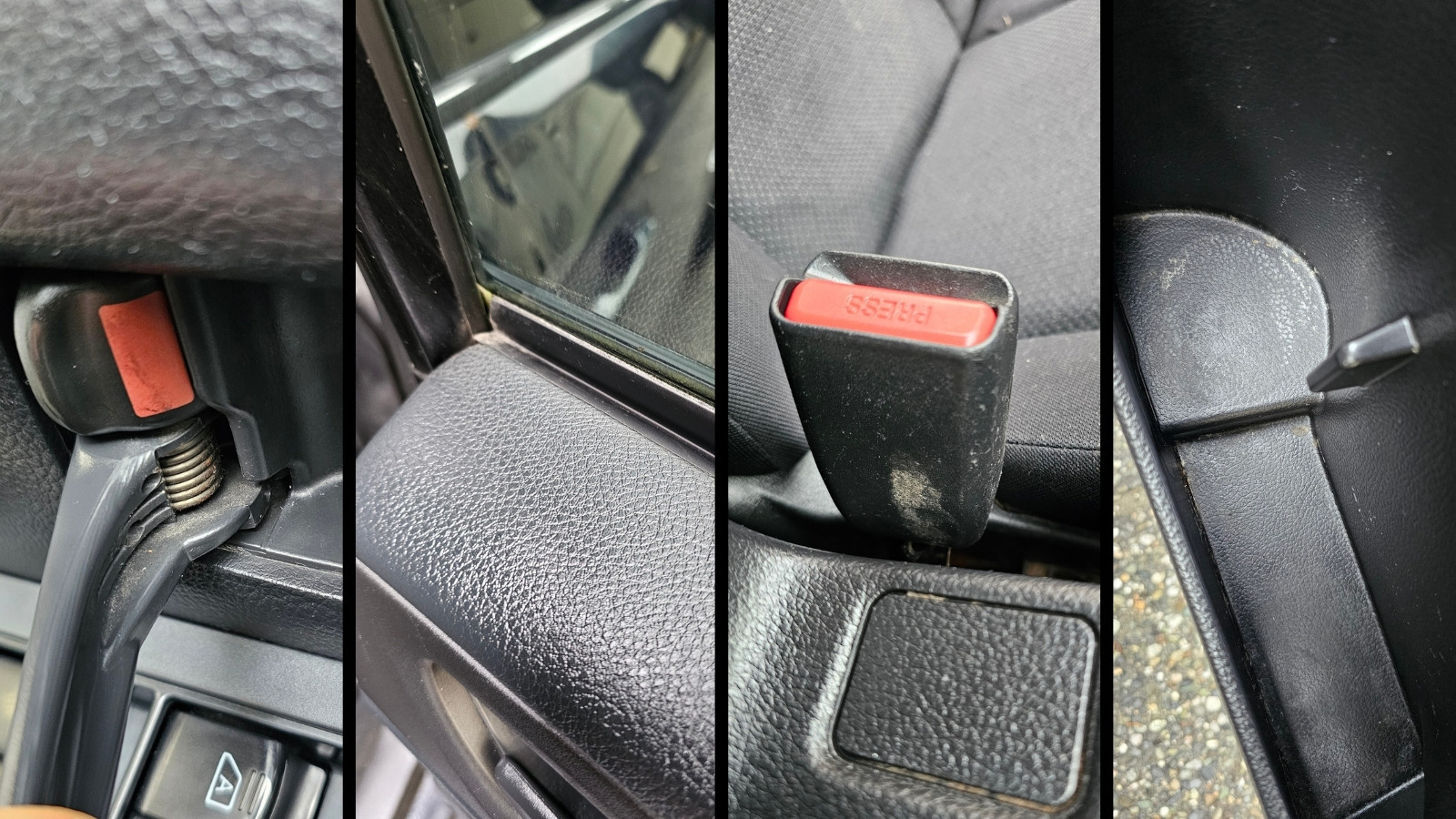
Additional areas showing missed buildup, contamination, and lack of attention to detail after the previous days “deep cleaning” service.
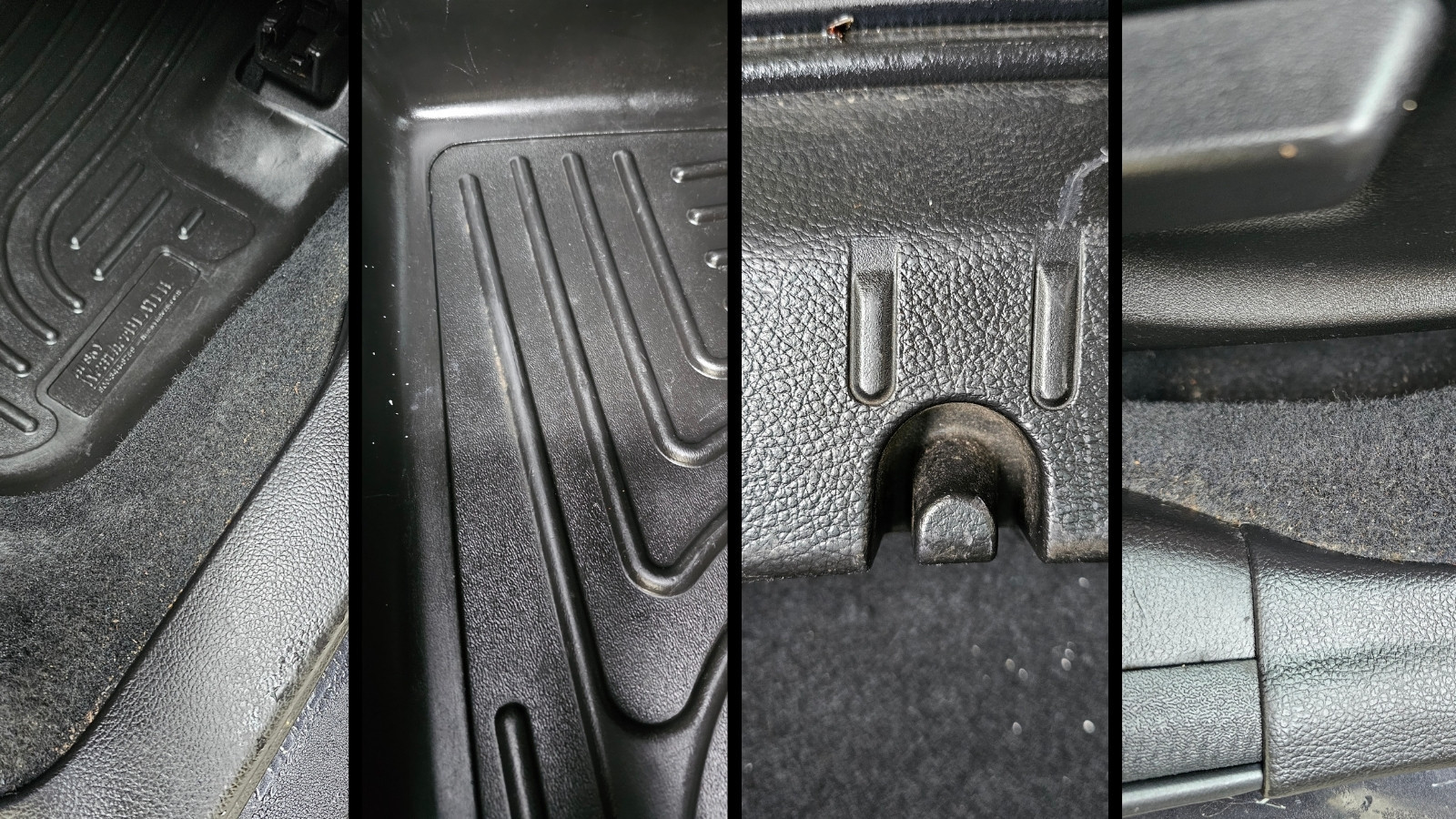
Greasy floor mats, missed debris, unaddressed seams, and buildup along carpet edges showed clear signs of a rushed process compressed to meet lower pricing expectations.
Professional interior detailing and restoration involves more than wiping visible surfaces. Moisture control, extraction, proper drying, contamination removal, and attention to small details all play a major role in the final result.
In many situations, lower pricing feels like the better decision initially, but incomplete cleaning often leads to customers paying again later to properly correct the remaining issues.
Red Flag #7: Quick “Yes” Answers Without Explaining the Process
They agree before understanding the work
It can feel reassuring when a detailer quickly says yes. But that response can hide a problem. If they agree without asking questions or explaining the process, they likely simplify the work.
That usually means they focus on booking, not the result.
No explanation of what the service actually involves
Some services sound simple on the surface. Heavy interior cleaning, odors, or bio-related issues require multiple steps. They take time, proper handling, and follow-up. If no one explains that it becomes easy to assume the job is quick.
That assumption leads to mismatched expectations.
The result often becomes surface-level
When the process is not explained, the work often gets reduced.
That can lead to:
- visible areas looking clean
- hidden areas left untreated
- buildup not fully removed
The vehicle may look better at first. But the issue often returns after a few days.
What to look for instead
A professional detailer explains the process before booking.
They walk you through:
- what needs to be done
- why it takes time
- what level of result to expect
Clear explanation is not upselling. It helps you understand what you are paying for. If everything sounds simple, the full process likely is not being explained.
Red Flag #8: “Licensed and Insured” Used as a Selling Point Without Context
“Licensed and insured” gets used a lot in detailing. But most people don’t know what that actually means. In Washington, a business license is simply registration — it doesn’t reflect experience, skill level, or the type of work being performed.
Understanding the Difference
Insurance can also vary significantly. Some policies only cover general business operations, while others are designed to protect the client’s vehicle while it’s being worked on, for detailing whether shopped based or mobile that is called garage keepers’ insurance.
Without the right type of coverage, damage to a vehicle may not be fully protected the way a customer would expect.
Why This Matters
This doesn’t mean a business is doing something wrong. But when “licensed and insured” is used as a primary selling point without explanation, it can create a level of confidence that isn’t always backed by the actual coverage or experience behind the service.
Understanding what those terms really mean helps you ask better questions and make a more informed decision.
Red Flag #9: No Clear Business Presence Beyond Social Media
Many detailing businesses operate primarily through social media. While that can be convenient, it can also make it harder to understand how the business is structured.
If there’s no clear website, service breakdown, or consistent place where information is organized, it can be difficult to know:
- what services are actually offered
- how pricing is structured
- or how the process works
A clear business presence helps create transparency. Without it, everything depends on individual conversations, which can lead to inconsistent expectations.
Red Flag #10: Reviews That Don’t Reflect a Real Customer Experience
Watch for unnatural review patterns
A high number of reviews can look impressive. But timing and consistency matter more than volume.
Be cautious if you see:
- a large number of reviews posted within a very short timeframe
- multiple reviews appearing minutes apart
- profiles that don’t look like real customers
- little variation in how the experience is described
These patterns don’t usually reflect normal customer behavior. Most businesses receive reviews gradually over time. When reviews appear in clusters like this, it suggests they were added in bulk rather than coming from real, independent experiences.
Reviews should reflect real customers over time, not sudden spikes that don’t match how the work is actually performed. Detailing takes time, so review patterns should reflect that.
Watch for patterns that suggest reviews are being incentivized
Some businesses receive more reviews because they actively encourage them with rewards and incentives. This doesn’t always mean the work is poor. But it can affect how the reviews should be interpreted.
When reviews are tied to discounts or future incentives, more customers are likely to leave one. That can create a higher volume of positive reviews than what would occur naturally.
In these cases, even detailed reviews may reflect the incentive as much as the experience. The result is a review profile that looks stronger than average, not necessarily because of the work itself, but because more customers are motivated to respond.
A more reliable signal is a steady mix of detailed reviews over time, without outside influence encouraging each one.
Why This Matters
Reviews should help you evaluate consistency. Not just popularity. A smaller number of detailed, experience-based reviews is often more useful than a large number of vague ones. Because it shows how the work is actually performed, not just how often it is booked.
What strong reviews usually include
A high rating does not always tell the full story. You need to look at what people actually say.
Detailed reviews often mention:
- communication
- the condition of the vehicle
- what was done
- how the results held up
Real, detailed reviews that mention communication, process, and results usually indicate a consistent experience. If you want to see what that looks likes in practice, you can read through our recent customer reviews here.
Final Thoughts
Not every detailing company works the same way. What sets them apart is their process, the time they invest, and the level of attention they give each vehicle. Some vehicles look clean at first glance, but many never receive a proper detail. The right service improves your vehicle’s appearance while also protecting and maintaining it over time.
Taking the time to understand what goes into proper detailing makes it easier to recognize the difference — and choose a service that aligns with the level of care your vehicle deserves.
If you have questions about your vehicle or want help determining the right approach, feel free to reach out. We’re always happy to walk through your options and help you make an informed decision.